How Trasier Technology built Sadak Sujhav (सडक सुझाव), Nepal's first integrated road complaint and
maintenance tracking platform.
Sector
Civic & GovTech
Status
Operational
Platform
iOS & Android
Stack
React Native, Node.js, PostgreSQL, Mapbox
The Problem
A broken road, and nowhere to report it
A pothole, a broken streetlight, a blocked drain. Everyone sees them, but reporting one used to mean a
phone call to the right office, on the right day, to the right person. Most reports never made it, and
the ones that did vanished into a queue no citizen could see and no official could easily manage.
There was no shortage of people who cared, on either side. What was missing was the system connecting
them: a channel for reports that couldn't get lost, and a way for municipal staff to see what was open,
who owned it, and whether it actually got fixed.
The Approach
Design for both sides of the report
A complaint app on its own isn't infrastructure, it's a suggestion box nobody checks. Trasier built Sadak
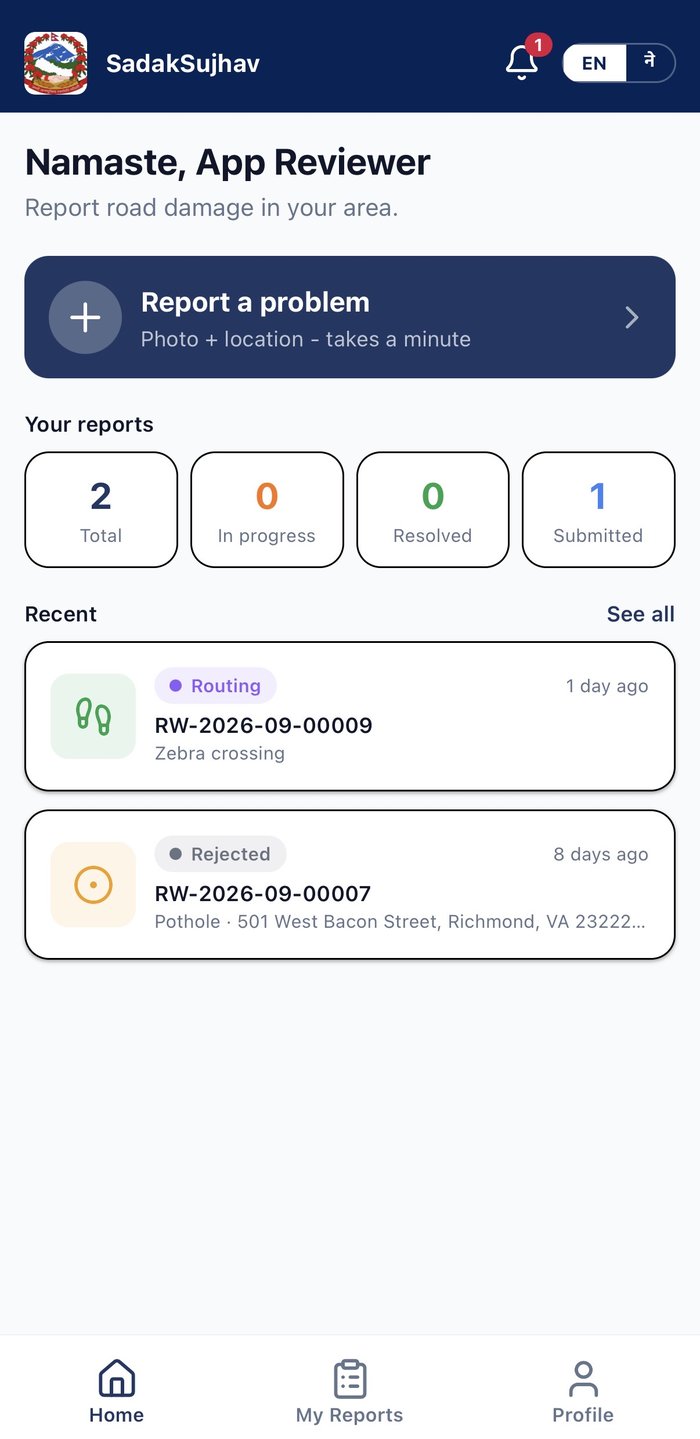
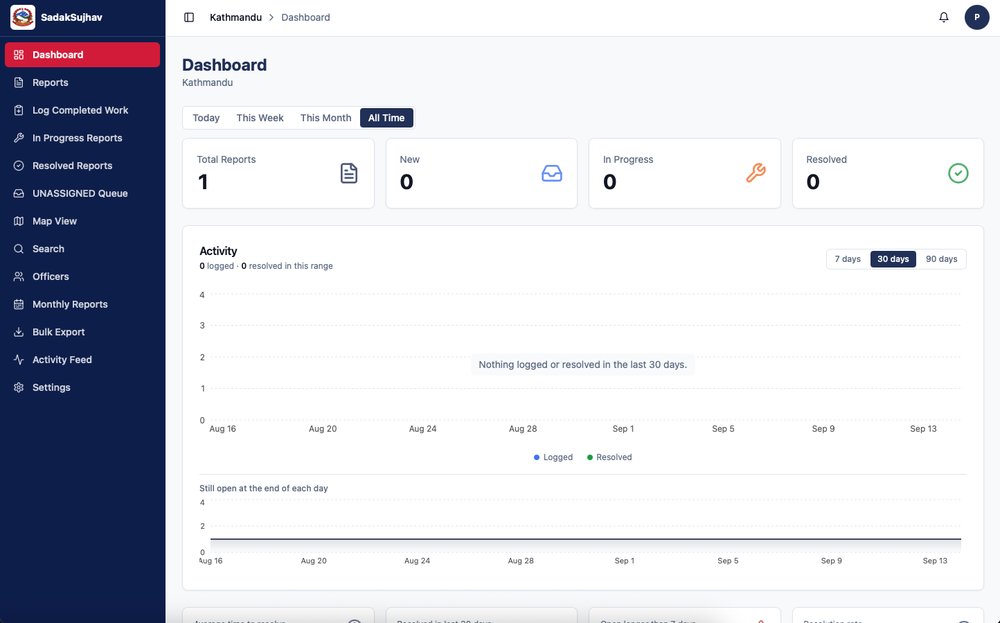
Sujhav as two connected systems: a citizen-facing app that makes reporting effortless, and a municipal
admin dashboard that makes acting on those reports manageable, with real-time geolocation tying every
report to an exact place on the map.
Getting that right meant sitting with how the work actually happens: how a report needs to move from
submitted, to assigned, to in progress, to resolved, and building the workflow around that reality
instead of a generic ticketing template.
The Solution — Citizen App
Reporting a problem takes seconds
01
photo_camera
Snap a photo
Capture the issue right where it is. A
picture is the report.
02
my_location
Auto-location
GPS pins the exact spot automatically,
so no one has to describe an address.
03
category
Pick a category
Pothole, drainage, streetlight, and
more, so it reaches the right team.
04
send
Submit
One tap and it's filed: logged,
located, and on its way to the right office.
After submitting, a citizen isn't left guessing. Real-time status updates move the report through
submitted, acknowledged, in progress, and resolved, a visible history keeps a timeline of every step, and
citizens are notified and can confirm once the issue is actually fixed.
The Solution — Municipal Dashboard
A system of record for the office, not just the app
Municipal staff get a full operational view: a dashboard of totals and status breakdowns, a live
map of every report, an unassigned queue so nothing sits untouched, and officer assignment so
accountability has a name attached to it.
check_smallReports, in-progress, and resolved views
A citizen no longer has to wonder if a report disappeared, they can watch it move. A municipal office no
longer relies on memory and phone logs, they have a real system of record: who reported what, where,
when, and who's responsible for fixing it. That's the difference between a suggestion box and
infrastructure.
Sadak Sujhav is operational today, trusted by the Ministry of Infrastructure Development's Kathmandu
Division, and it's the template Trasier is using to expand the same approach, real-time reporting,
accountable workflows, and a system both sides actually use, to other parts of Nepal's public
infrastructure.
Want something like this for your city?
Bring us your hardest problems. We'll tell you honestly what's buildable and how we'd approach it.